#DarkArc0014
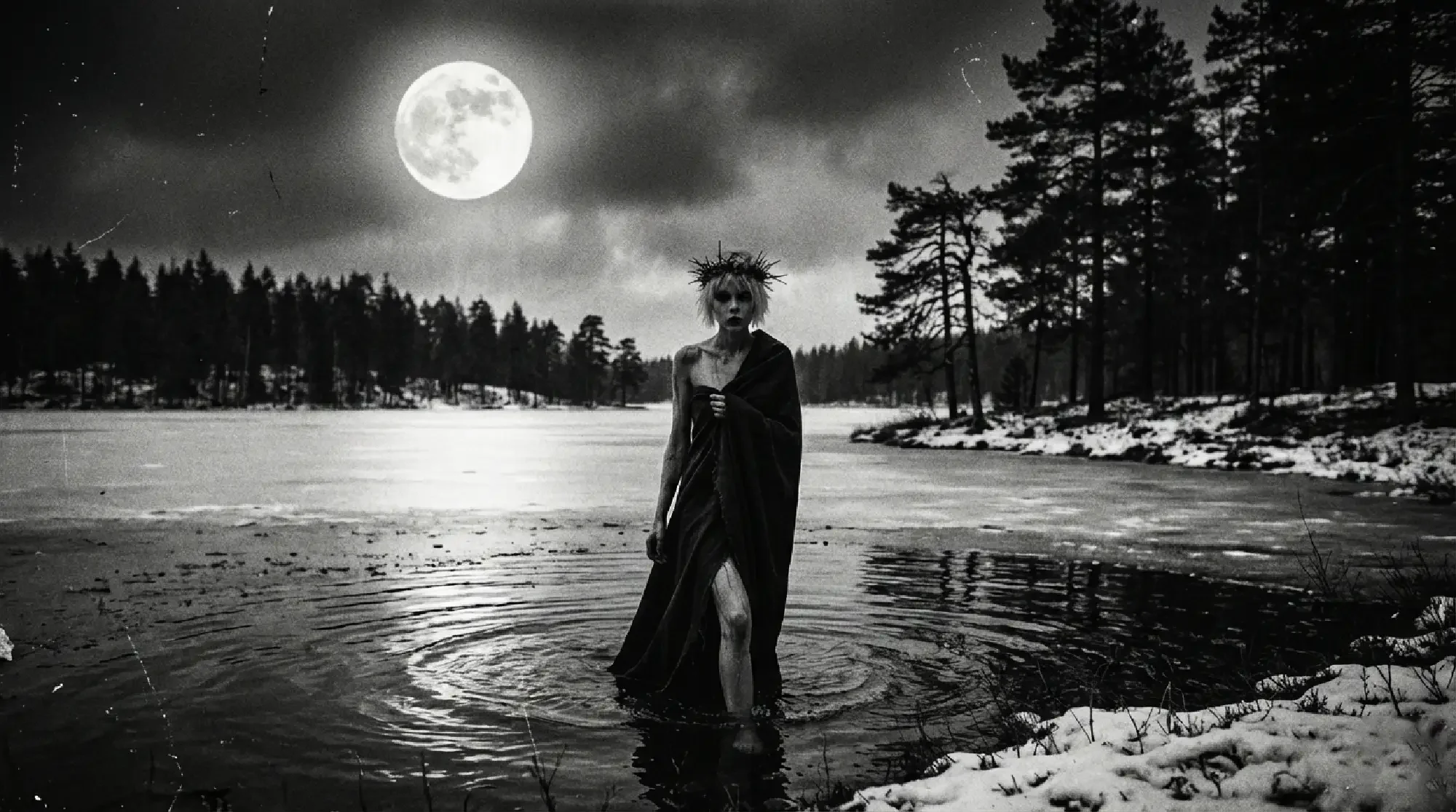
Eeek! Ronja is back from a watery grave, bent on revenge
My once lover, you’ll discover
My revenge is like no other
Deep in a Scandinavian forest, location and time unknown, there’s a lake. Its surface, a still mirror of moonlight. Then a ripple occurs, growing in circumference until a figure emerges. One of much malice in its intent.
For she is a woman betrayed, then murdered, but she has decided that she will choose how her story ends, and it is a tale of revenge served very cold indeed.
“It is a tale as old as time, and it will remake and retold for as long as lovers betray lovers, which is to say, forever”
All Hate Comes from me
Onto you
How you lived, lied a life untrue
The way I died, so shall you
Ronja — No Cover No
Deep in a Scandinavian forest, location and time unknown, there is a lake. Its surface, a still mirror of moonlight. Then a ripple occurs, growing in circumference until a figure emerges. One of much malice in its intent.
For she is a woman betrayed, then murdered, but she has decided that she will choose how her story ends, and it is a tale of revenge served very cold indeed.
“No Cover No is a tale as old as time, and it will be remade and retold for as long as lovers betray lovers, which is to say, forever,” explains Swedish songstress Ronja. “Maybe no stories are truly original, especially when one goes so deep emotionally; it will always resonate with every age and audience. It will just be retold according to that moment and location in time.
“It is a tale as old as time, and it will be remade and retold for as long as lovers betray lovers, which is to say, forever,”
“This is especially true from a female perspective. Often the ‘heroine’ is murdered by a physically stronger male partner, but in death, she gains a spectral power against which simple mortal strength is no defence. They are also often killed so as to be replaced by another woman, so the revenge is often doubled against both her lover and his new partner, making it a mark of the ‘hell hath no fury’ idea.”
The Verse:
The thing you thought you saw the last of
The nothing you sought to cast off
As if “done with”, was yours to call
Shows you knew nought of me at all
And the final vow:
And to make my curse so much worse
You’ll look on as I take her first
“They were very much in that tradition,” Ronja continues. “There are so many spine-tingling stories in every culture on this subject, I knew I had to make one of my own. I like a bit of Gothic spite. And where better to make a tale of revenge freezing cold than to start it in a frozen Nordic lake. I hope it will give people the willies when they listen.”
“We love Ronja at The Tapes because she is like a big book of characters,” says Mujiki, Creative Director at DarkArc Studios, home of The Datura Tapes in Florence. “All very different, weird, and ancient. But we love the way she makes the old also very much of today. Many folk-tales have existed for hundreds of years, but each generation tells them differently. Like Snow White, maybe—although what I would say is none of Ronja’s protagonists are very ‘Disney’ [Laughs], unless you cheer for the baddies, I guess.”
It is also an tune-twisting challenge for our in-house production team, darkStylus, literally mixing the new and old at their desk.
“Yeah, Ronja always makes us come at a song a very different way,” says producer Dom Salmon. “She isn’t just a mega-scholar of folklore, but also the instruments and styles of the times. Plus she has all these weird field recordings of forests and animals, storms, or her friends playing a hurdy-gurdy in a ruined castle or whatever—it’s even more nuts than her lyrics, really.
“It’s a sound goldmine for us. Then,we’re in the studio with her playing baritone guitars with violin bows, or dropping keys on zither strings, or recording stuff in the basement of a Florentine church for the echo. Then it all goes into the Droneda effects chain we built for her stuff. What comes out? Who knows. The Droneda introduces so much randomness, it’s all luck and chance and un-repeatable, but the more other-worldly the result, the more it suits her songs.
“We call it GlitchGothic. Maybe it’ll catch on?”
“Crazy people do crazy things,” adds Mujiki. “And I love them for it, but also, they make me crazy. They make me the bad guy. ‘When is it finished, guys??’ I always ask. Dom says, ‘MK, don’t you love it?’ with his stupid sad face. Of course I do, but the track is four hours long of reverb from some detuned violins! I can’t release that as a single. I promise Ronja can put it on her album, which is now a week long already.”
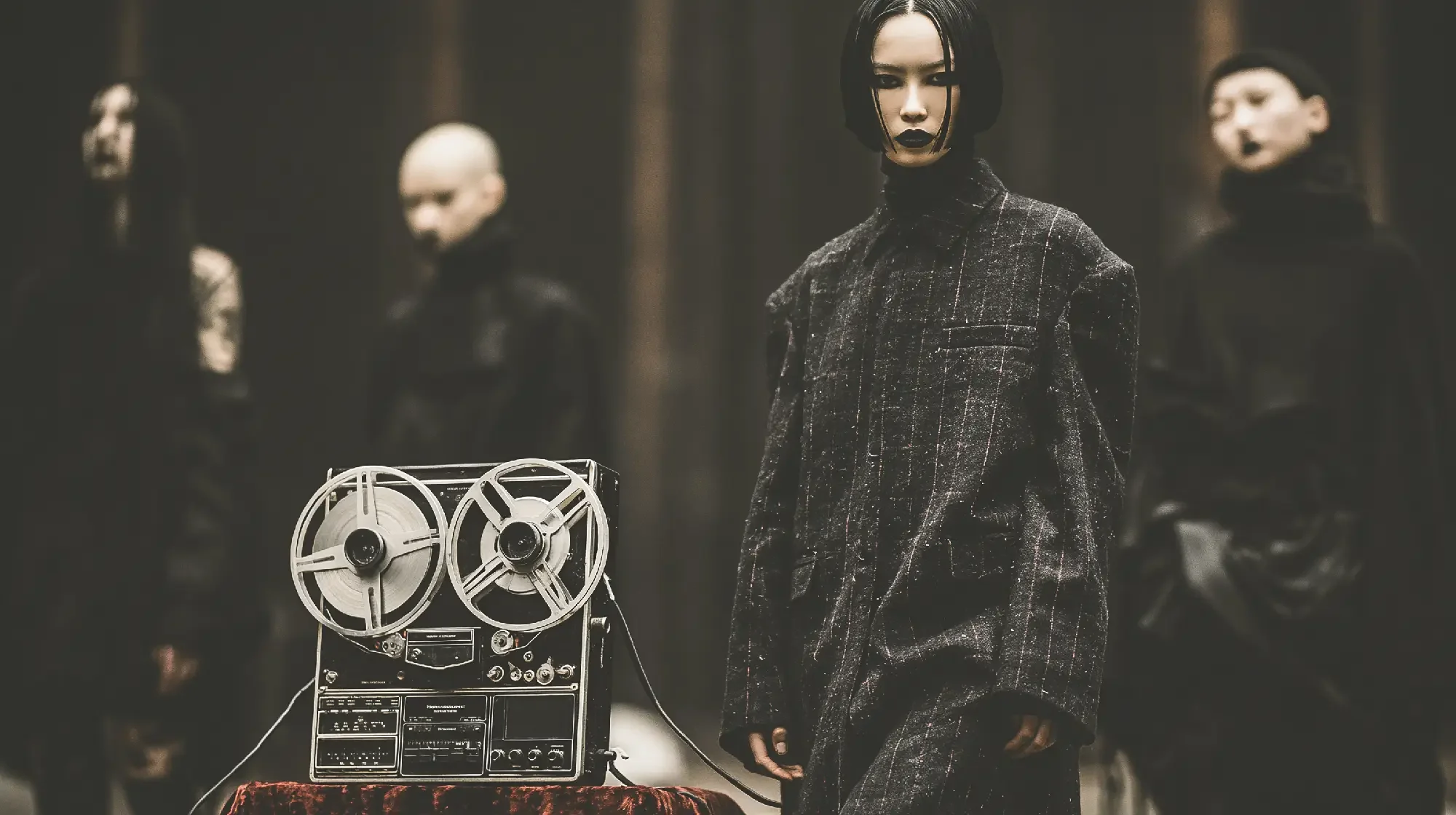
FugaceFugace freeze their bits of shooting in Sweden
The last piece of the puzzle on this release comes from our sister design atelier, FugaceFugace.
“Yeah, the studio love making things for Ronja,” says creative director Rei Zamane. “I mean, we love all of them at The Tapes, sure, but she is like some mad witch, she even looks like one! And there is nothing we can do that is too weird. We made a crown of twisted branches, roses, and bird skulls? She loved it! For this single, we cut up some old felt, took some friends to a forest, and filmed them haunting it all like ghosts. Good job it was felt; Sweden is freezing in January. Can’t believe Mujiki is releasing this single in a heatwave!”
“Do I have a favourite spectral-revenge story?” concludes Ronja. “I don’t think there is one single story, because every teller has their own twist, but I might stretch to a top five. All worth a shiver. I hope one day No Cover No will also be told round a forest campfire—just make sure to hold a torch under your chin when you do, haha!”
THE APPENDIX //
FIVE TALES OF SPECTRAL DOOM-REVENGE
1. The Myth of Medea & Philinnion (Classic/Mythological Roots)
While not technically “from the grave” in the literal sense, Medea represents the ultimate wronged woman who destroys everything her betrayer holds dear.
For a literal resurrection myth, there is always Philinnion in ancient Roman lore (recorded by Phlegon of Tralles): a young woman who dies but returns from the grave to seduce a guest, blaming the parents who thwarted her potential happiness, leading to a tragic, terrifying second death.
2. “Ligeia” & “Morella” by Edgar Allan Poe (Gothic Literature)
Poe was obsessed with the idea of the dead woman returning to supplant the living. In Ligeia, the narrator’s first wife dies, he remarries, and when the second wife falls ill and dies, her corpse transforms into the resurrected body of Ligeia, fueled by sheer, unstoppable will. An unjustly forgotten Poe classic, replete with gothic dread in spades.
3. Black Sunday / La maschera del demonio (Gothic Cinema)
If we look at the cinematic adaptations of these tropes, Mario Bava’s 1960 masterpiece Black Sunday is unmatched. A witch executed by her own brother vows vengeance, returning from the grave centuries later to possess her beautiful descendant and destroy the family line. It has that exact grainy, high-contrast, atmospheric black-and-white aesthetic we love; certainly, it was an inspiration for Rei and FugaceFugace when creating the cover artwork.
4. Lady Snowblood & The Bride Wore Black
(Modern Literary & Cinematic Revenge)
While Lady Snowblood (Shurayuki-hime) features a woman born in prison specifically to avenge her mother’s death (acting as a literal extension of the mother from beyond the grave), François Truffaut’s The Bride Wore Black (based on the Cornell Woolrich novel) presents a bride whose husband is murdered on the church steps. She becomes a ghost-like figure of spectral retribution, hunting down the five men responsible.
The terrifying spirit from the deep, the Strandvaskare. Illustration ©fugacefugace for The Datura Tapes
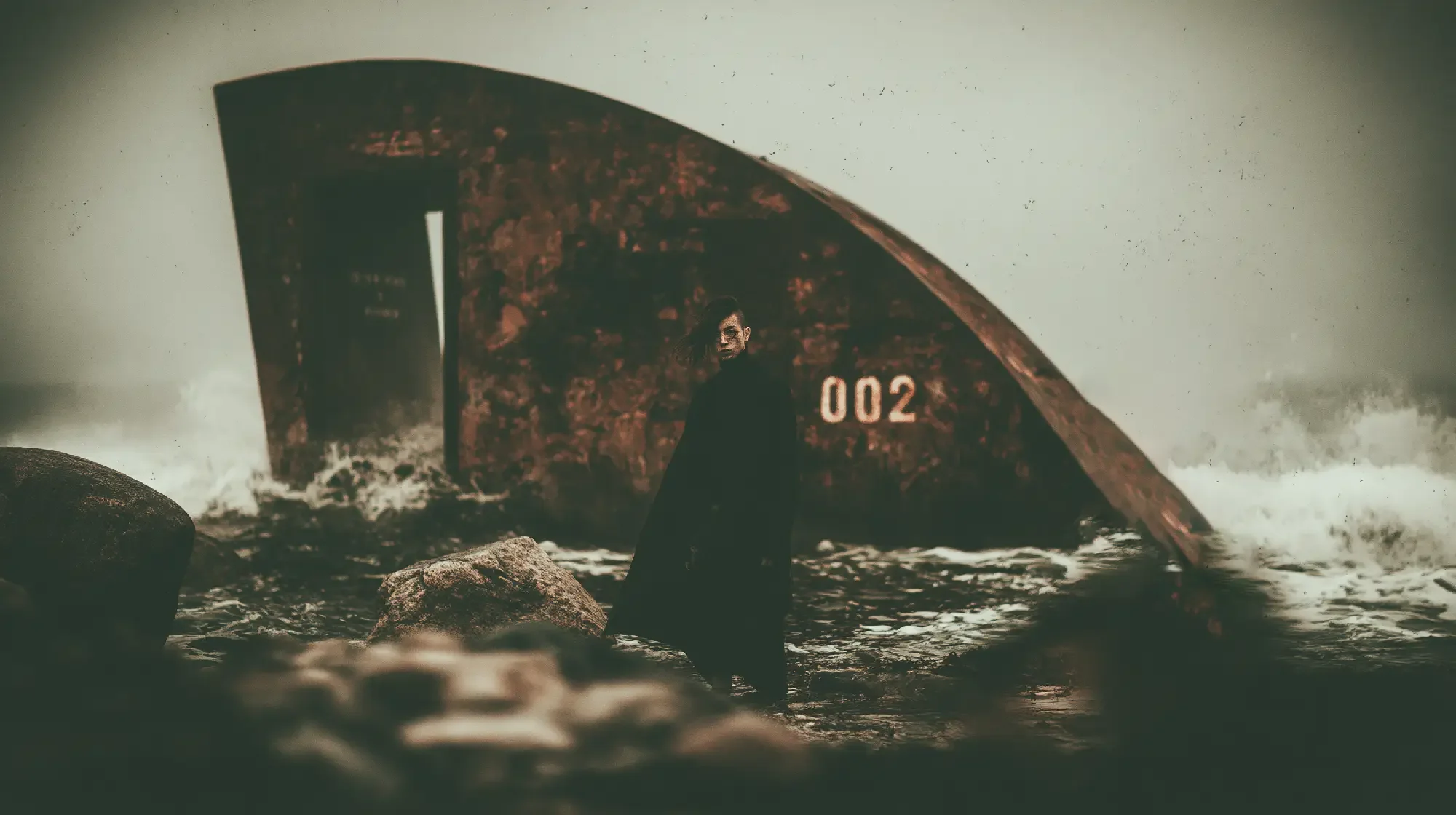
The Swedish Strandvaskare: Deeply deadly
5. The Legend of the Sea-Gallows Bride (The Swedish Strandvaskare)
Probably my favourite, being a very Swedish-centric tale. It has everything in the GlitchGothic manifesto: betrayal, fertility, witches, violence, and a very pagan vs. Christianity battle at its heart.
In the coastal folklore of Bohuslän and the western islands, a Strandvaskare is the corpse of a drowned person that washes ashore. Because they died violently at sea and were denied a proper burial in consecrated ground, it is said they cannot rest.
The most potent version of this involves a young woman wronged by a powerful local merchant or an unfaithful ship captain. Betrayed, pregnant, or cast out, she is drowned in the freezing, slate-grey North Sea. She doesn’t come back as an ethereal, weeping ghost. Scandinavian lore is visceral—she returns as a Gjenganger (literally an “again-walker”), a physical, corporeal undead being. Her flesh is waterlogged, blue-cold, and smelling of salt and decay.
She hunts down the man who wronged her by tracking his scent on the coastal winds. The Gjenganger doesn’t just scare him; she uses the terrifying strength of the dead to drag him from his bed, through the midnight pine forests, and straight into the crushing black waves where she died. The only way to stop her is to find her washed-up body and bury it properly beneath a stone marked with a cross—but usually, she completes her bloody business before anyone realizes she’s out of the surf. A figure still used to scare children to behave and go to bed in silence.
After all, who wants a Gjenganger to come visit?